Why Your K-Beauty Routine Stopped Working After a Few Months
Quick Answer: K-beauty routines commonly stop working because of product layering fatigue — too many actives stacked over months can compromise the skin barrier, and skin itself adapts to consistent routines over time, meaning the routine that worked in month one may need adjustment by month four, not abandonment.
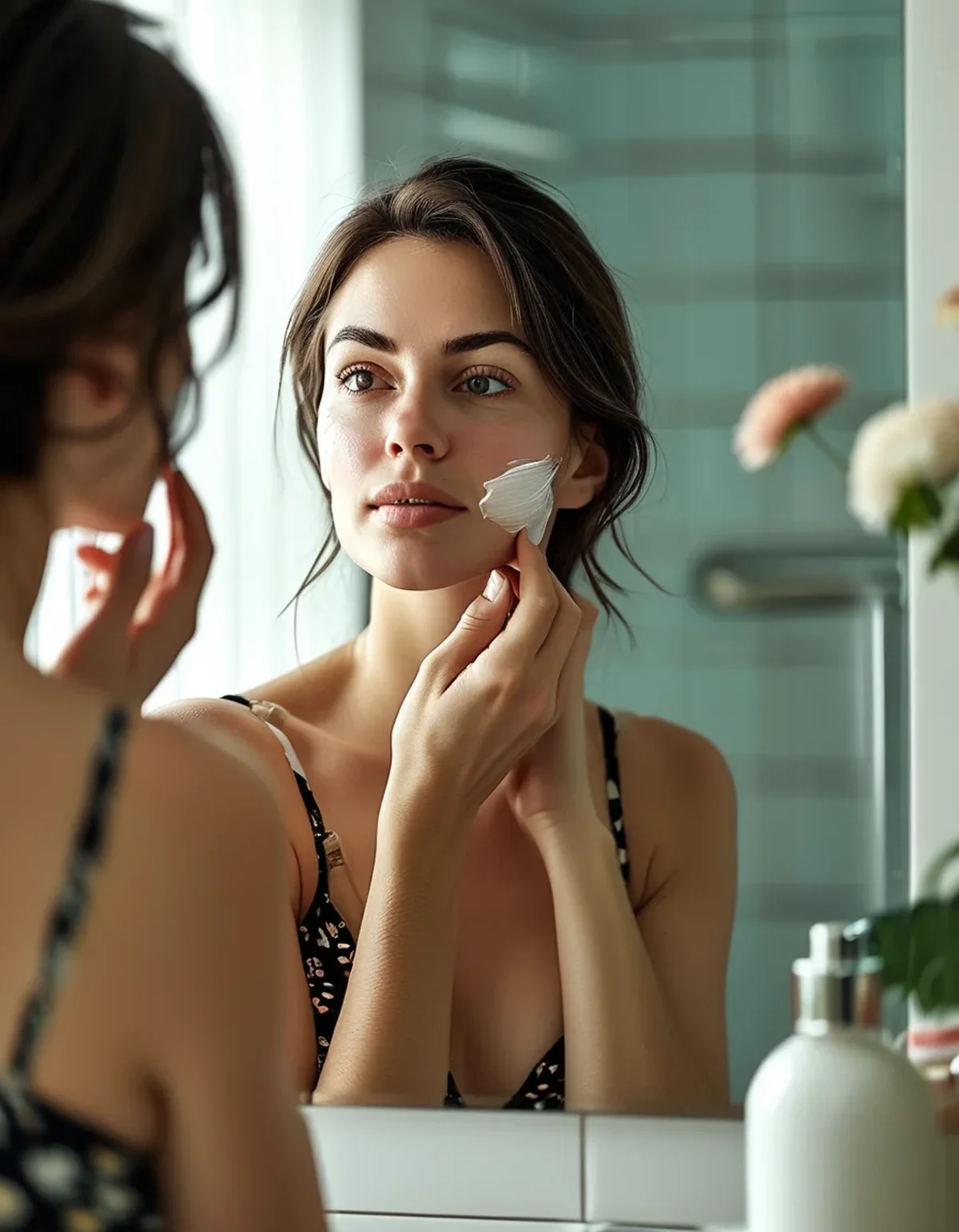
Your skin looked amazing three months into your K-beauty routine. Now it’s dull, occasionally irritated, or just… the same as before you started. Here’s what’s actually happening underneath a routine that seemingly stopped delivering.

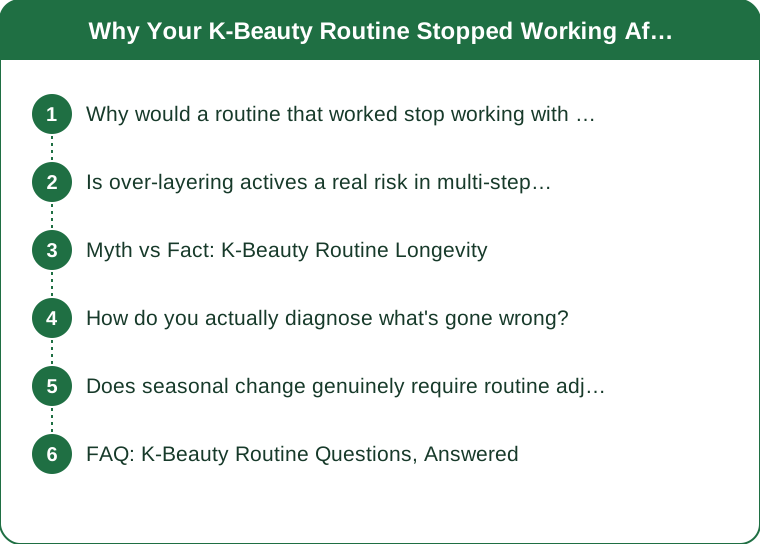
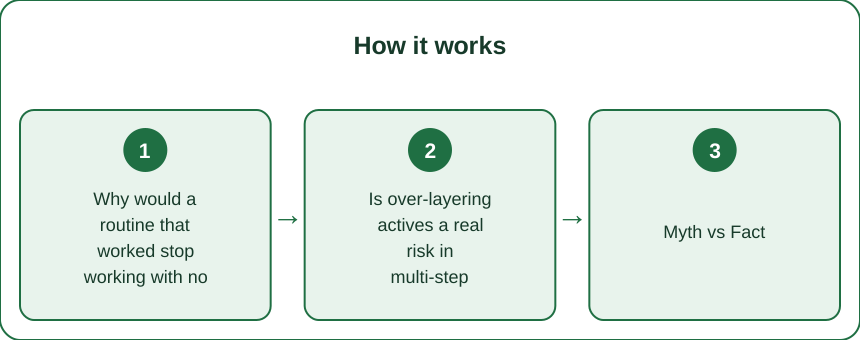
Why would a routine that worked stop working with no changes?
Skin genuinely changes over time in response to consistent input — barrier function, oil production, and sensitivity all shift as skin adapts to a stable routine, which is part of why the exact same steps can produce different results in month one versus month four. This isn’t a sign of doing something wrong; it’s a normal adaptation response that most routines don’t account for, since they’re marketed as static rather than something to periodically reassess.
Is over-layering actives a real risk in multi-step routines?
Yes, and it’s one of the most common causes of a stalled or reversed K-beauty routine. Combining multiple exfoliating or active-heavy steps (AHA/BHA toners, vitamin C serums, retinol, strong essences) without spacing them out can cumulatively compromise the skin barrier over weeks, even if no single step seems harsh on its own. The 10-step format specifically makes this easy to fall into, because each individual product feels gentle while the combined daily load isn’t accounted for.
Myth vs Fact: K-Beauty Routine Longevity
Myth: More steps always means better results. Fact: Beyond a certain point, additional steps mostly add barrier stress without proportional benefit — a simplified 5-6 step routine often outperforms an unchanged 10-step one after the skin has adapted.
Myth: If a routine worked before, the same routine should always work. Fact: Skin’s needs shift with season, hormonal changes, and adaptation to consistent actives — a routine built for spring skin often needs adjustment by late summer.
Myth: Irritation means an ingredient is bad. Fact: Irritation more often signals cumulative barrier stress from the whole routine’s active load, not necessarily one ‘bad’ product — removing the wrong single step sometimes doesn’t fix it.
How do you actually diagnose what’s gone wrong?
A useful approach: strip back to a bare-minimum routine (cleanser, moisturizer, sunscreen) for 1-2 weeks, letting the skin barrier reset without active ingredient input. If skin improves notably during that reset, the issue was cumulative active load. Reintroduce actives one at a time over subsequent weeks rather than all at once, which reveals which specific addition, if any, is currently a poor fit — rather than guessing at the original 10-step routine.
Does seasonal change genuinely require routine adjustment?
Meaningfully, yes — skin’s oil production, barrier needs, and sensitivity commonly shift enough between seasons that a routine optimized for one period underperforms in another. A rich, active-heavy routine built for dry winter skin can be genuinely too much for the same skin in humid summer months, and treating the routine as needing seasonal review (not just when something visibly goes wrong) prevents the slow-plateau pattern many people experience.
FAQ: K-Beauty Routine Questions, Answered
How often should a skincare routine be reassessed?
Every season change is a reasonable checkpoint, plus any time you notice a plateau or new irritation lasting more than a couple weeks.
Should I stop using actives if my routine stops working?
A temporary reset (1-2 weeks of bare basics) is a reasonable first diagnostic step before permanently removing any specific product.
Is a shorter routine actually better than the full 10-step approach?
Not inherently — but after skin has adapted to a long routine, simplifying and reintroducing steps gradually often reveals that fewer, well-chosen steps perform as well or better than the full stack.
TL;DR:
- Skin adapts to consistent routines over months — a stopped-working routine is often a normal adaptation, not a mistake
- Over-layering actives can quietly compromise the barrier even when no single step feels harsh
- Reset to basics for 1-2 weeks to diagnose, then reintroduce actives one at a time
- Seasonal routine review prevents the slow plateau many K-beauty routines eventually hit
A stalled routine usually needs recalibration, not replacement — skin, actives, and season all shift, and the routine should shift with them.
Keep Reading
This article is for general informational and styling purposes only. Fit, sizing, and product availability may vary.