Why Korean Toner Feels Completely Different From What You're Used To
Quick Answer: Western toner traditionally targeted oil removal and pore tightening, often with alcohol-based astringent formulas. Korean toner is formulated primarily as a hydrating first-layer step that preps skin for absorption of subsequent products — the category name is shared, but the function and ingredients are largely different.
You picked up a Korean toner expecting the familiar stinging, oil-stripping feeling and got something that felt more like a light essence. That’s not a defective product — it’s a different product category wearing a familiar name.
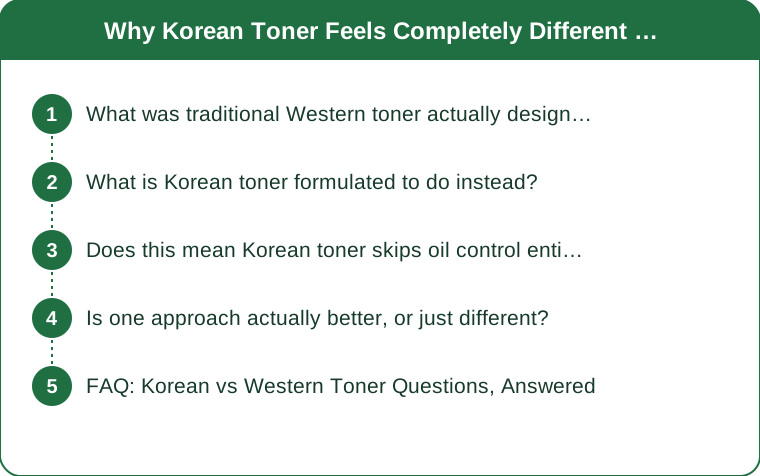
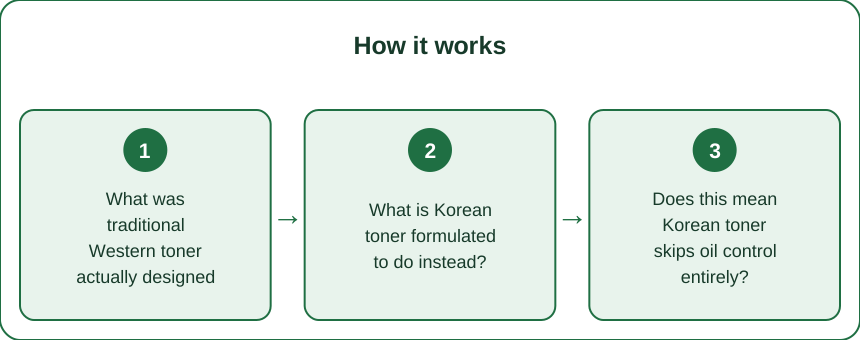
What was traditional Western toner actually designed to do?
Historically, Western toner emerged to remove residual cleanser and oil, and tighten the appearance of pores, often using alcohol or astringent ingredients like witch hazel. This formula philosophy prioritized a ‘squeaky clean,’ oil-free feeling as the marker of effectiveness.
What is Korean toner formulated to do instead?
Korean toner is generally formulated to rehydrate and rebalance skin’s pH after cleansing, prepping it to better absorb the layers of hydrating products that typically follow in a Korean routine. The ingredient focus shifts toward humectants (like hyaluronic acid or glycerin) rather than astringents, which is why it feels closer to a light, hydrating essence than a traditional Western toner.
Does this mean Korean toner skips oil control entirely?
Mostly yes, by design — oil control in a typical Korean routine is usually handled earlier, during double cleansing, rather than by the toner step. This is a genuinely different sequencing philosophy: clean thoroughly first, then focus every subsequent step on hydration and repair rather than continued oil removal.
Is one approach actually better, or just different?
It depends on skin type and goals rather than one being objectively superior. Very oily or acne-prone skin may still benefit from some astringent properties at a step in the routine, while normal to dry skin often responds better to the hydration-first Korean approach — the frameworks solve somewhat different problems.
FAQ: Korean vs Western Toner Questions, Answered
Can I use a Korean-style toner if I have oily skin?
Yes, though pairing it with a proper double cleanse and possibly a lightweight, oil-appropriate moisturizer afterward tends to work better than expecting the toner itself to control oil the way a traditional astringent toner would.
Should I apply Korean toner with a cotton pad or just hands?
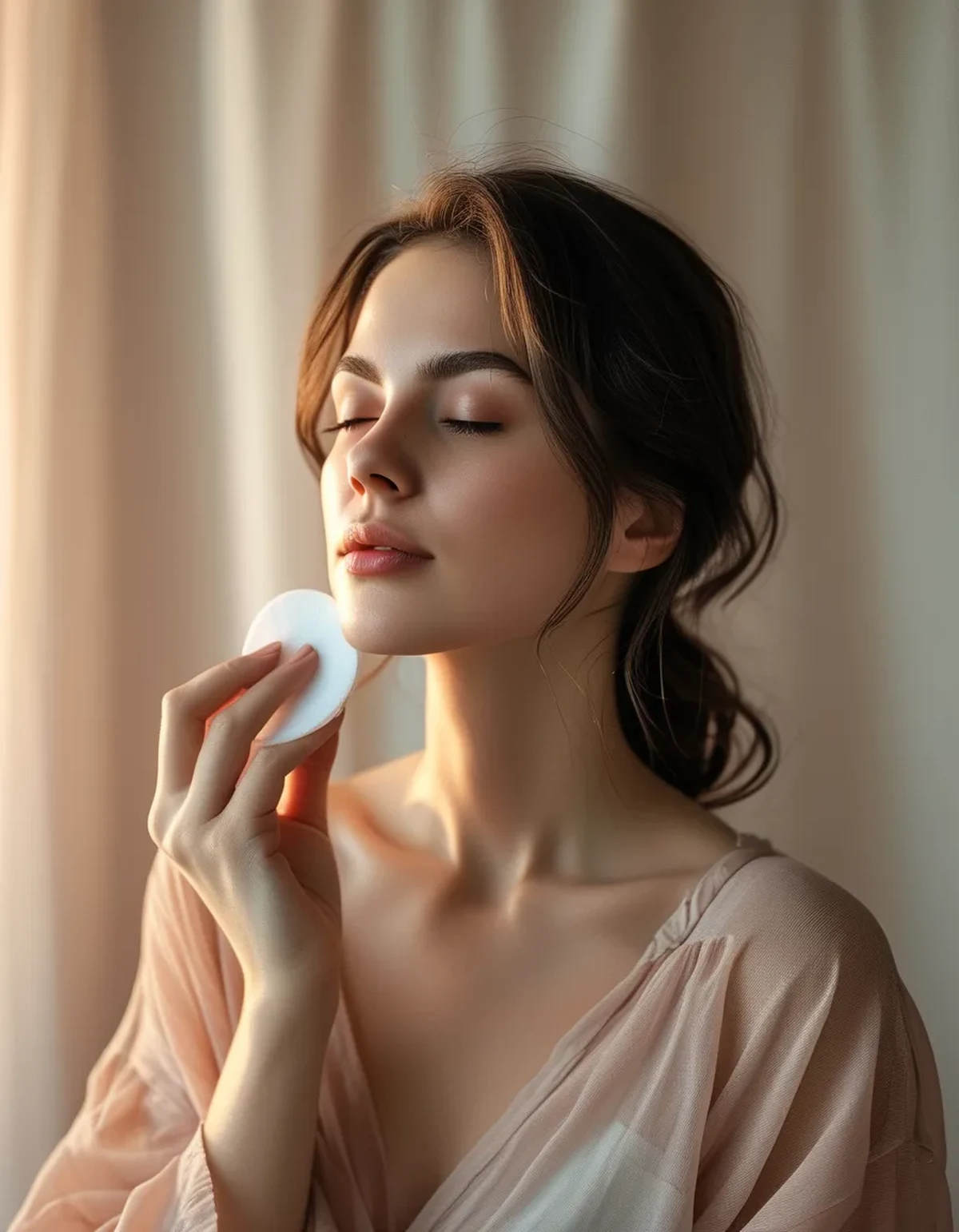
Both work — cotton pad application with light pressure can offer very gentle exfoliation depending on the formula, while hand application (patting rather than rubbing) is often preferred for maximum hydration absorption without pulling at skin.
Is Korean toner meant to be a single layer or applied multiple times?
Many Korean routines use a technique of applying several thin layers (‘7 skin method’) rather than one single application, specifically to build up hydration incrementally — though a single layer is also perfectly reasonable depending on your routine and time.
TL;DR:
- Traditional Western toner focused on oil removal and pore tightening, often with astringent ingredients
- Korean toner is generally a hydrating first-layer step that preps skin for absorption of later products
- Oil control in Korean routines is typically handled during double cleansing, not the toner step
- Neither approach is objectively better — they solve somewhat different skin priorities
Keep Reading
This article is for general informational and styling purposes only. Fit, sizing, and product availability may vary.