Why Korean Layering Feels Sticky and the Timing Fix That Solves It
Quick Answer: Sticky skin after a Korean routine is usually a timing problem, not a product problem. Humectants like glycerin and hyaluronic acid stay tacky until the water they are holding either absorbs or evaporates, which takes roughly 30 to 60 seconds per layer in dry air and considerably longer in humidity. Applying the next layer onto a still-wet one traps that moisture at the surface, and the tackiness compounds with every step. Waiting between layers, using less product per layer, and pressing rather than rubbing solves it in most cases.
You did everything in the right order. Toner, essence, serum, moisturiser. And now your face feels like a sticky note and your hair keeps attaching itself to your cheek.
Why does Korean skincare feel sticky even when you use the right order?
Because the order was never the problem. The interval between steps was.
Most K-beauty layers are humectant-heavy. Glycerin, hyaluronic acid, butylene glycol, and fermented extracts all work by binding water and holding it at the skin surface. That is exactly what makes them effective, and it is also exactly what makes them tacky while they are still doing it.
Tackiness is a stage, not a state. A humectant layer feels wet, then tacky, then finally comfortable as the water is either absorbed into the upper layers of skin or lost to the air. Interrupting that sequence with a new layer restarts it.
Each interrupted layer adds to the total. Four products applied 10 seconds apart leaves you with four unfinished layers stacked on top of each other. The same four products applied 45 seconds apart usually feel fine.
Ambient humidity slows everything down. In dry indoor air, evaporation helps the layer settle quickly. In a humid August bathroom right after a shower, there is nowhere for that water to go, so the tacky stage stretches out for minutes.
The give-away test: if your skin feels sticky immediately but comfortable 15 minutes later, you have a timing issue. If it is still sticky an hour later, you have a product or quantity issue instead.
How much product should each layer actually be?
Nearly everyone uses too much, and the excess has nowhere to go.
Toner or first essence: 3 to 4 drops, pressed in. Enough to dampen the surface, not enough to run down your jaw. If it pools, that is product sitting on top rather than being used.
Essence or serum: a pea-sized amount for the whole face. Actives and humectants work by concentration and contact, not by volume. Doubling the amount does not double the effect; it doubles the residue.
Moisturiser: roughly a fingertip unit for the face. The classic dermatology measure - the amount that fits along the last segment of your index finger - is a reliable ceiling for most textures.
Sunscreen is the exception. Sun protection genuinely is dose-dependent, and the standard measure of about a quarter teaspoon for the face is the amount the SPF rating was tested at. Do not reduce this one for texture reasons; change the formula instead.
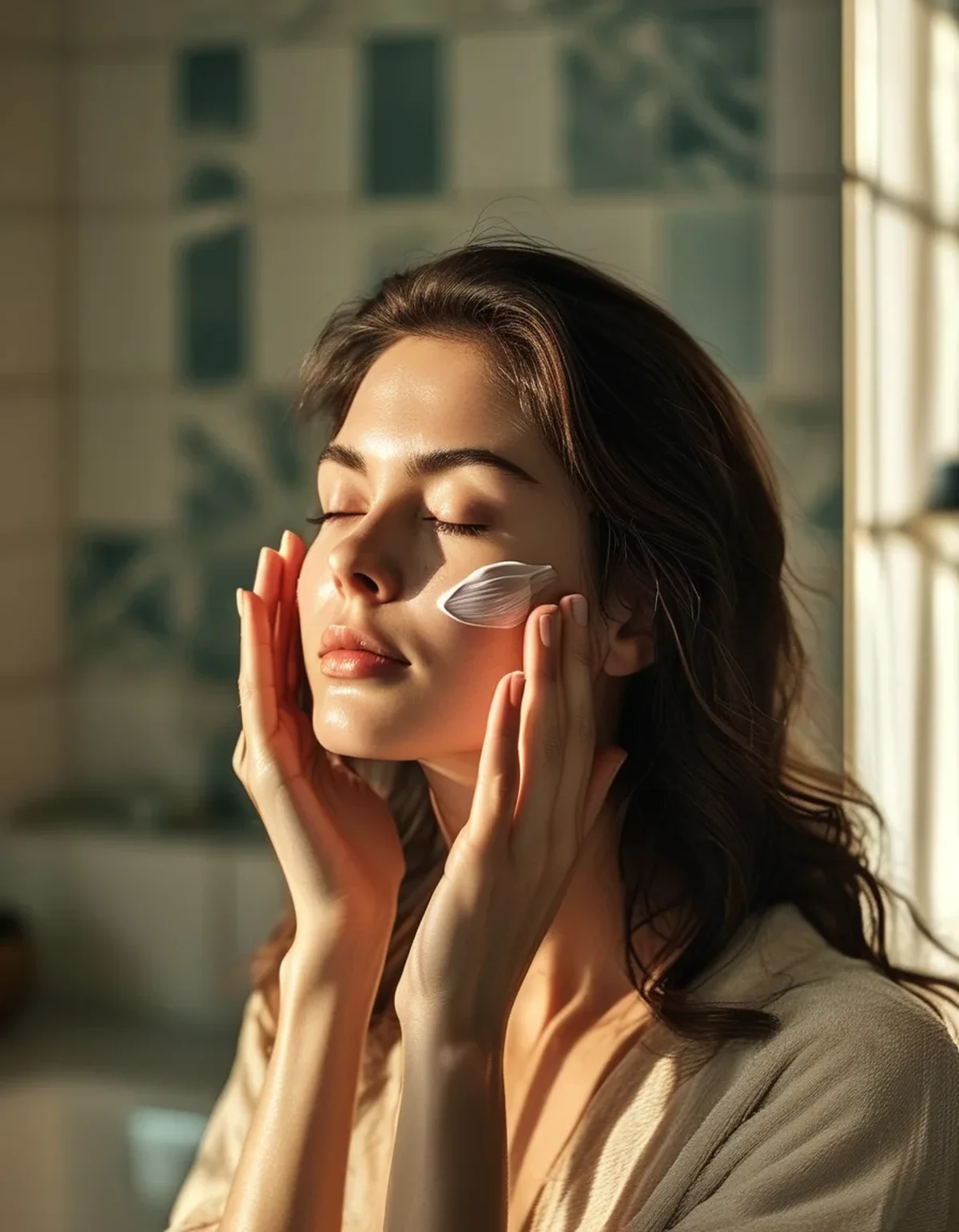
Press, do not rub. Flat palms pressed against the skin for 5 seconds pushes product into contact with the surface. Rubbing spreads it around and drags it into a film that takes far longer to settle.
And warm it first. Rubbing the product between your palms for 2 seconds before pressing thins the texture slightly and speeds absorption noticeably, especially with thicker essences.
5 Mistakes That Make Korean Layering Sticky
Mistake 1: Applying to soaking wet skin. The classic advice is to layer onto damp skin, and damp is the operative word. Skin still dripping from the shower has a water film that dilutes each layer and keeps everything at the surface. Pat until barely damp - about 30 seconds after washing - then start.
Mistake 2: Treating the ten-step routine as a minimum. Every additional humectant layer adds tack. Four well-chosen products with proper intervals feel better on the skin than eight rushed ones, and they perform about as well for most people.
Mistake 3: Stacking two products with the same job. A hydrating toner, a hydrating essence, and a hyaluronic serum are three versions of the same step. The skin can only hold so much water at the surface; the rest sits there being sticky. Pick one and move on.
Mistake 4: Skipping the occlusive step because it feels heavy. This one is counterintuitive. A light cream or lotion on top actually seals the humectant layers and stops the tacky surface feeling, because it changes what your fingers are touching. Leaving humectants uncovered is often why the tack persists.
Mistake 5: Doing the whole routine in a steamy bathroom. The one place where evaporation cannot help you. Move to a bedroom with normal air and the same routine settles in half the time - a genuinely free fix that most people never try.
What to change if the timing fix is not enough
If you have adjusted intervals and quantity and it is still tacky, the formulas are the next place to look.
Check where glycerin sits in the ingredient list. In the top three, it is a substantial part of the formula. Two products both fronting glycerin will stack noticeably; swap one for a formula led by a lighter texture.
Look for the word gel or watery in the product description. Gel-textured essences and emulsions are designed to settle faster than lotion or cream textures, and in humid weather they are the more practical choice regardless of skin type.
Consider seasonal swaps rather than year-round routines. The routine that felt perfect in February will feel heavy in late August. Dropping one hydrating layer and switching the moisturiser to a gel-cream through the humid weeks is standard practice, not a compromise.
Watch for silicone-free formulas if you dislike the finish. Dimethicone and its relatives give that smooth, dry-touch feeling that masks tackiness. Formulas without them can feel stickier even when they are hydrating well - a preference issue rather than a quality one.
Reconsider layering actives over humectants. Some combinations - particularly niacinamide-heavy essences under certain sunscreens - produce genuine pilling and a gummy feel. If little rolls appear, that is pilling rather than tackiness and needs a spacing change of several minutes, not seconds.
Give any new routine two weeks. Skin adjusts its own hydration behaviour, and a routine that feels tacky in week one frequently feels normal by week three.
FAQ: Sticky Korean Skincare Questions, Answered
How long should I wait between skincare layers?
About 30 to 60 seconds in normal indoor air, and longer in humid conditions. The practical test is touching the back of your hand to your cheek - if it feels damp rather than tacky, wait a little longer before the next layer.
Is sticky skin a sign the products are not absorbing?
Not necessarily. Humectants are supposed to hold water at the surface, so a tacky stage is expected. What matters is whether it resolves within 10 to 15 minutes. Persistent stickiness an hour later suggests too much product or a formula mismatch.
Should I skip moisturiser if my skin already feels sticky?
Usually the opposite. A light cream on top seals the humectant layers and removes the tacky surface feel. Skipping it often leaves the stickiness in place all morning.
Why is my routine stickier in summer than winter?
Because humid air slows evaporation, so each layer stays in its tacky stage far longer. Most people need one fewer hydrating layer and a lighter moisturiser texture through humid months.
Does stickiness mean I am using too many products?
Sometimes, but check timing and quantity first. Four products applied 10 seconds apart feel worse than seven applied a minute apart. Fix the intervals before cutting the routine.
TL;DR:
- Stickiness is usually a timing issue - each humectant layer needs 30 to 60 seconds before the next one.
- Use less per layer, press with flat palms instead of rubbing, and warm the product first.
- Do not stack three products that all do hydration; pick one and move on.
- A light cream on top seals the humectants and removes the tacky surface feel, so do not skip it.
- Humid air slows everything down - drop a layer and go lighter through late summer.
The routine is probably fine. It just needs a few more seconds of patience between the steps than anyone ever tells you.
Keep Reading
This article is for general informational and styling purposes only. Fit, sizing, and product availability may vary.